When the weather changes, switching your wardrobe can make your home feel more organized and comfortable. However, seasonal clothing can quickly become a source of clutter if it is stored without a plan. Bulky coats, sweaters, swimwear, and special-occasion pieces all need different types of care.
Efficient clothing storage is about more than saving space. The right system helps protect fabrics, prevent unpleasant odors, reduce wrinkles, and make it easier to find what you need next season. With a few simple steps, you can store seasonal clothes safely without filling every closet, drawer, or corner of your home.
Start by Sorting Your Clothes
Before packing anything away, sort your clothing into clear groups. Avoid storing items that you no longer wear, no longer fit, or no longer want.
Create four piles:
– Keep for next season
– Donate
– Repair or alter
– Recycle or discard
Be honest when deciding what to keep. If you did not wear an item during its last season, ask yourself whether you are likely to wear it in the future. Keeping fewer clothes makes storage easier and leaves more room for items you use regularly.
You can also sort clothing by type, such as:
– Sweaters and knitwear
– Jackets and coats
– Pants and shorts
– Dresses and formal clothing
– Swimwear
– Scarves, hats, and gloves
– Shoes and accessories
Grouping similar items helps you choose the right storage method and makes unpacking much faster.
Clean Everything Before Storage
Always clean seasonal clothes before storing them, even if they appear to be fresh. Small amounts of food, body oils, sweat, or dirt can leave stains and attract insects over time.
Follow the care instructions on each garment. Wash or dry-clean clothing as recommended, then make sure every item is completely dry before packing it away. Moisture trapped in a container can lead to mildew, musty smells, and fabric damage.
Pay special attention to:
– Coat collars and cuffs
– Sweater underarms
– Pockets
– Scarves and hats
– Shoes and boots
– Clothing worn outdoors
Allow recently washed clothing to air out before storing. If an item has a strong odor, clean it again rather than covering the smell with a scented product.
Choose the Right Storage Containers
The best container depends on the type of clothing, the available space, and how long the items will be stored.
Plastic Bins
Plastic bins with secure lids are useful for most seasonal clothing. They protect garments from dust, moisture, and pests. Clear bins allow you to see the contents, while opaque bins can protect clothing from light.
Choose sturdy containers that are large enough to hold clothes without compressing them excessively. Several medium-sized bins are often easier to lift and organize than one very large container.
Fabric Storage Bags
Fabric bags allow clothing to breathe and work well for items that need airflow. They are especially useful for clean sweaters, delicate garments, and clothing stored in a dry closet.
Avoid using fabric bags in damp areas such as basements or garages unless the space is well protected from moisture.
Vacuum Storage Bags
Vacuum bags can save space by compressing bulky items such as comforters, puffy jackets, and thick blankets. However, they are not ideal for every fabric. Long-term compression may cause some clothing to lose its shape.
Use vacuum bags for suitable bulky items, but avoid placing delicate clothing, leather, structured garments, or natural-fiber knitwear inside them for extended periods.
Garment Bags
Garment bags are helpful for suits, dresses, coats, and other pieces that wrinkle easily. Use breathable fabric garment bags when possible. Plastic dry-cleaning bags are not a good long-term solution because they can trap moisture and may cause fabrics to develop odors.
Fold or Hang According to the Fabric
Different clothing types should be stored in different ways.
Fold knitwear, sweaters, T-shirts, jeans, and stretchy fabrics. Hanging these items for long periods can cause them to lose their shape or develop shoulder marks.
Use hangers for structured garments such as:
– Blazers
– Suits
– Dresses
– Button-down shirts
– Coats
Use wide, sturdy hangers for heavier items. For delicate garments, padded hangers can help prevent creases and fabric damage.
When folding sweaters, place heavier pieces at the bottom and lighter pieces on top. Avoid creating very tall stacks, since they can become unstable and make it difficult to retrieve individual items.
Protect Delicate and Special Fabrics
Some materials require extra care during storage. Wool, cashmere, silk, leather, and suede should be handled according to their care instructions.
For knitwear, fold rather than hang. Place delicate pieces in breathable bags or clean cotton covers. Store leather and suede in a cool, dry place away from direct sunlight. Do not wrap these materials tightly in plastic.
Make sure special garments are clean before storage. Stains that seem minor can become harder to remove after several months.
Avoid placing heavy objects on delicate clothing. Pressure can cause permanent creases or flatten textured fabrics.
Use Labels and a Simple Inventory
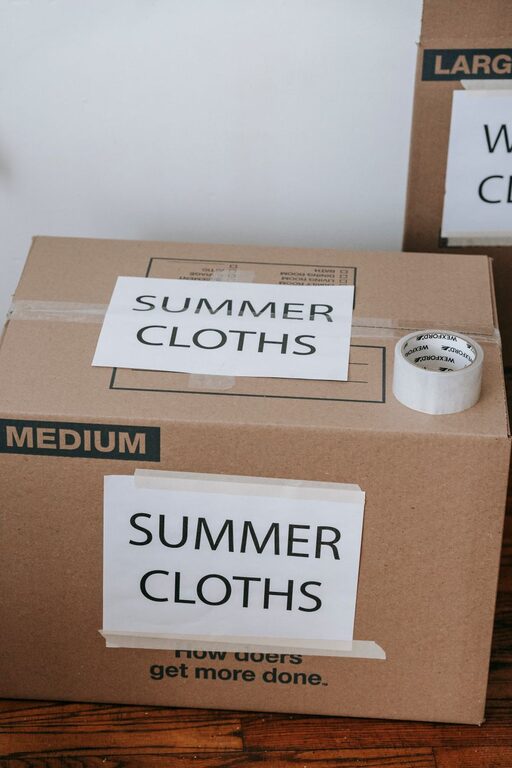
A storage system only works if you can find items later. Label every container with its general contents and the season. For example, use labels such as “Winter Sweaters,” “Summer Swimwear,” or “Fall Accessories.”
If you use opaque containers, add a short inventory list to the outside or keep a digital list on your phone. Include details such as:
– Main clothing categories
– Number of containers
– Special items included
– Items that need repair
– Items to replace before next season
Do not pack clothing randomly just to fill a container. Keeping related items together saves time when you change your wardrobe again.
Choose a Good Storage Location
Store seasonal clothes in a cool, dry, and reasonably dark area. A closet shelf, under-bed storage space, or interior cabinet can work well.
Avoid locations that experience large changes in temperature or humidity, such as:
– Damp basements
– Hot attics
– Garages with leaks
– Areas near plumbing
– Spaces exposed to direct sunlight
Keep containers slightly raised from the floor if possible. A shelf, platform, or under-bed box can provide extra protection from dust and accidental moisture.
Do not place stored clothing next to strong-smelling products such as paint, cleaning chemicals, or gasoline. Fabrics can absorb odors even when containers are closed.
Prevent Odors and Pests
Clean storage areas before putting clothes away. Vacuum shelves, drawers, and floors, then allow the area to dry fully.
Avoid placing strongly scented products directly against clothing. If you want a fresh scent, use a small, fabric-safe sachet and check it regularly. Never use products that could stain garments or leave oily residue.
To reduce the chance of pests:
– Store only clean clothing
– Keep storage containers closed
– Vacuum storage areas regularly
– Inspect garments before packing them
– Avoid overfilling containers
– Check stored items occasionally
Every few months, inspect the storage area for moisture, unusual odors, or signs of damage. Early attention can prevent a small problem from affecting an entire wardrobe.
Make Seasonal Changes Easier
When the next season arrives, unpack clothing gradually rather than emptying every container at once. Inspect each item, air it out, and check for stains or damage before putting it back into regular use.
This is also a good time to repeat the sorting process. If you did not wear something during the previous season, consider donating it or placing it in a separate review pile.
A simple yearly routine works well:
- Remove clothing from the current season.
- Wash or clean items before storage.
- Repair missing buttons, loose seams, or broken zippers.
- Sort unwanted pieces.
- Fold or hang clothing correctly.
- Pack similar items together.
- Label each container.
- Store everything in a dry, accessible location.
With consistent habits, seasonal clothing storage becomes a quick household task instead of a major project. Clean garments, suitable containers, clear labels, and a dry storage space will help your clothes remain in good condition and keep your wardrobe easier to manage year after year.
About the Author